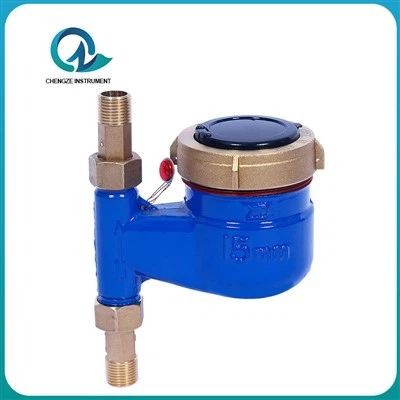
In today’s digital age, the Internet of Things (IoT) has revolutionized various industries, and the water management sector is no exception. As a supplier of IoT remote water meters, I’ve witnessed firsthand the transformative power of these devices in optimizing water usage and management. One critical aspect that often comes up in discussions with our customers is how these meters handle the storage of long – term data. In this blog post, I’ll delve into the intricacies of long – term data storage for IoT remote water meters, sharing insights from our experiences in the field. IoT Remote Water Meter
The Importance of Long – Term Data Storage in IoT Remote Water Meters
Long – term data storage plays a pivotal role in the effectiveness of IoT remote water meters. It provides a wealth of information that can be used for a variety of purposes. For utility companies, long – term data can be used to monitor consumption patterns over extended periods. By analyzing historical usage data, they can identify trends, predict future demand, and make informed decisions about infrastructure upgrades.
For consumers, access to long – term data can help them understand their water usage habits. They can track how their consumption changes seasonally, identify potential leaks by looking for abnormal usage patterns over time, and take steps to conserve water. Moreover, regulatory bodies may require utility companies to maintain long – term data for compliance and auditing purposes.
Data Collection in IoT Remote Water Meters
Before we discuss data storage, it’s essential to understand how data is collected in the first place. Our IoT remote water meters are equipped with advanced sensors that can accurately measure water flow, pressure, and other relevant parameters. These sensors continuously gather data at regular intervals, which could be as frequent as every few seconds or as long as every few minutes, depending on the specific requirements of the application.
The collected data is then transmitted wirelessly to a central server. We use a variety of communication protocols, such as LoRaWAN, NB – IoT, and ZigBee, depending on the network availability and the range required. These protocols ensure reliable and secure data transmission, even in challenging environments.
Storage Mechanisms for Long – Term Data
On – device Storage
Our IoT remote water meters are designed with some level of on – device storage. This is crucial for situations where the network connection is intermittent or unreliable. For instance, in rural areas with poor cellular coverage, the meter can store data locally until a stable connection is established.
The on – device storage is typically in the form of non – volatile memory chips. These chips can store a significant amount of data, ranging from a few kilobytes to several megabytes, depending on the model of the meter. The data stored on the device is organized in a structured format, making it easy to retrieve and transmit later.
Cloud – based Storage
For long – term data storage, cloud – based solutions are our preferred option. Cloud storage offers several advantages over on – device storage. Firstly, it provides virtually unlimited storage capacity. As the volume of data generated by IoT remote water meters can grow exponentially over time, having access to scalable storage is essential.
Secondly, cloud storage offers high – level security. Cloud service providers invest heavily in security measures, such as encryption, access controls, and regular security audits. This ensures that the long – term data is protected from unauthorized access, data breaches, and other security threats.
We partner with leading cloud service providers to ensure the reliability and performance of our data storage solutions. These providers offer redundant data centers located in different geographical regions. In the event of a natural disaster or a technical failure in one data center, the data remains safe and accessible from other locations.
Edge Computing for Data Pre – processing
In addition to on – device and cloud – based storage, we also utilize edge computing for data pre – processing. Edge computing involves performing data processing tasks closer to the source of data generation, i.e., at the IoT remote water meter or a local gateway.
By pre – processing data at the edge, we can reduce the amount of data that needs to be transmitted to the cloud. For example, we can perform basic analytics on the meter, such as calculating daily consumption averages or detecting abnormal usage patterns. Only the relevant data, such as summary statistics or alerts, is then sent to the cloud for long – term storage. This not only reduces the bandwidth requirements but also improves the overall efficiency of the system.
Data Management and Analytics
Once the long – term data is stored, effective data management and analytics are crucial to extract valuable insights. Our system is designed to organize the data in a way that makes it easy to query and analyze. We use data management platforms that allow us to categorize the data by different parameters, such as time, location, and customer type.
Our analytics tools enable us to perform a variety of analyses on the long – term data. For example, we can use machine learning algorithms to predict future water consumption based on historical patterns. We can also identify correlations between different variables, such as water consumption and weather conditions, to gain a deeper understanding of the factors that influence usage.
Challenges and Solutions in Long – Term Data Storage
Data Security
As mentioned earlier, data security is a top concern when it comes to long – term data storage. In addition to the security measures provided by cloud service providers, we also implement our own security protocols. For example, we encrypt the data at the source, i.e., on the IoT remote water meter, before it is transmitted to the cloud. This ensures that even if the data is intercepted during transmission, it remains unreadable.
We also conduct regular security audits and penetration testing to identify and address any potential vulnerabilities in our system. Our security team stays up – to – date with the latest security threats and trends, and we continuously update our security measures to protect our customers’ data.
Data Integrity
Maintaining data integrity is another challenge in long – term data storage. Data can be corrupted during transmission or storage, which can lead to inaccurate analysis and decision – making. To address this issue, we use error – correcting codes and data validation techniques.
For example, when data is transmitted from the IoT remote water meter to the cloud, we attach a checksum to the data packet. The receiving end can use the checksum to verify the integrity of the data. If the checksum does not match, the data is considered corrupted, and a re – transmission is requested.
Scalability
As the number of IoT remote water meters in our network grows, and the volume of data generated increases, scalability becomes a critical issue. Our cloud – based storage solutions are designed to be easily scalable. Our cloud service providers allow us to increase or decrease our storage capacity as needed, based on our business requirements.
We also regularly monitor the performance of our data storage system to ensure that it can handle the growing data load. If necessary, we optimize the system by upgrading hardware, improving software algorithms, or adjusting the data management processes.
Conclusion
In conclusion, the storage of long – term data in IoT remote water meters is a complex but essential aspect of water management. Our IoT remote water meters are designed to collect, store, and transmit data effectively, using a combination of on – device storage, cloud – based solutions, and edge computing.

By leveraging advanced data management and analytics tools, we can extract valuable insights from the long – term data, which can be used to optimize water usage, improve infrastructure planning, and enhance customer service. However, we also face challenges in data security, integrity, and scalability, which we address through a combination of technical measures and continuous monitoring.
IoT Remote Water Meter If you’re interested in learning more about our IoT remote water meters and how they handle long – term data storage, or if you’re considering a purchase for your water management project, we’d be delighted to have a conversation with you. Contact us to discuss your specific needs and discover how our solutions can benefit your organization.
References
- Li, Y., et al. "A Comprehensive Survey on Internet of Things for Smart Water Management Systems." IEEE Access, 2019.
- Wang, Q., et al. "Edge Computing for the Internet of Things: A Survey." Proceedings of the IEEE, 2019.
- Vuruputuri, S., et al. "Cloud Computing for Internet of Things: A Survey." Journal of Internet of Things, 2017.
Shandong Chengze Instrument Co., Ltd.
We’re well-known as one of the leading iot remote water meter manufacturers in China, featured by quality products and good service. Please rest assured to buy high-grade iot remote water meter for sale here from our factory. Also, customized service is available.
Address: No.7, Wensi Road North Industrial Park, Liguan Town, Lanshan District, Linyi City, Shandong Province, China
E-mail: czwatermeter@163.com
WebSite: https://www.cz-watermeter.com/
