Hey everyone, quick question: if you’re renovating your place or building something new, have you ever stopped to think about flooring beyond basic tiles or hardwood? I know I used to stick to the usual stuff—until I started working with flexible stone supplies and realized how many people still ask me, “Wait, can flexible stone even be used on floors?” As someone who’s been in this game for a few years (not some random brand new supplier messing around), I hear this question at least twice a day, so let’s break this down straight, no fancy jargon. Flexible Stone

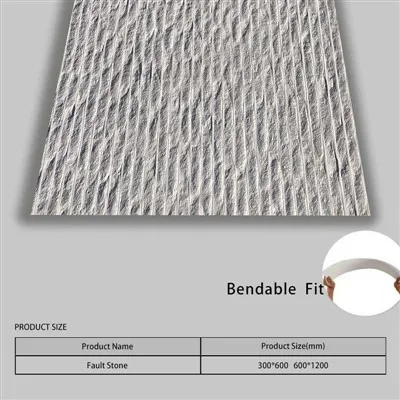
First off, let’s get one thing out of the way: flexible stone isn’t the same as regular stone tiles. Regular stone—like marble, granite, slate—thick, heavy, super tough to cut, hard to haul up stairs, and if you’ve ever priced out full marble tiles for a whole floor, you know the bill’s enough to make you skip renovations entirely. Flexible stone? It’s made by taking a thin layer of actual natural stone (think 1-3mm thick) and bonding it to a flexible, durable backing—usually something like fiberglass or polymer that lets it bend. That’s why it’s called “flexible,” duh. But just because it bends doesn’t mean it’s not hard enough for floors. Let’s get into the real stuff, not the hype.
I know what you’re thinking: if it’s thin and bendy, won’t it scratch like crazy, or crack under furniture? Let’s talk about durability first, because that’s the big one for floors—nothing kills a floor faster than scuffs or a heavy couch dropping. From what I’ve tested with our stock (and I’ve put our samples through way more stuff than I should have for a flooring supplier), the natural stone layer is the same real stuff you’d use on walls or countertops. It’s polished the same way, has the same Mohs hardness rating (that’s the scratch test scale, right?), so it can handle chair legs, shoes, even pet claws way better than, say, vinyl planks.
Wait, but what about under heavy loads? I recently did a project with a residential client who wanted flexible stone in their living room, and they had a huge leather sectional—like 800 pounds total—placed right in the middle. No issues, zero indentations. The trick is the backing: the fiberglass or polymer we use (we don’t cut corners with cheap backing, fyi) distributes weight evenly, so the stone layer doesn’t take all the pressure. We also recommend a proper underlayment—nothing fancy, just a thin foam or membrane that levels the subfloor and adds a little cushion—so it’s not directly on concrete or old wood. That underlayment is key for preventing cracks, even if you drop a full coffee table (though obviously, try not to drop coffee tables).
Next up, installation. This is where flexible stone for floors actually wins big over regular stone. Regular stone tiles need a pro with a tile saw, thick thinset mortar, grout, and they take forever to lay—plus they’re heavy, so moving them around is a two-person job. Flexible stone sheets? They come in big rolls (usually 1.2m wide, up to 5m long) so you can cover a whole hallway or living room in one continuous piece if you want. Installation is way simpler: you just apply a thin, flexible adhesive (we stock the exact stuff that works best, so ask if you need it) to the subfloor, unroll the sheet, smooth out bubbles with a roller, and let it dry. Grout? Only if you want to, actually—some clients prefer a seamless look, and since it’s thin, there’s no bulky grout lines making it feel clunky. I’ve had DIY homeowners order our smaller sheets for their entryways and pull it off in a weekend, no prior tiling experience needed. That’s a huge plus, especially if you’re on a budget or want to save on labor costs.
But hold on, it’s not all sunshine and rainbows. Let’s be real about the downsides, because I don’t want to sell you something that’ll fail in a year. Flexible stone isn’t ideal for super high-traffic commercial spaces, like a busy restaurant or a retail store with hundreds of people walking in and out every single day. The thin stone layer is durable, but constant heavy foot traffic with things like carts or pallets could wear it down faster than regular stone. Also, if you have a really uneven subfloor? You might have to level it first, or the flexible sheet could stretch or bubble over time. And don’t get it wet for the first 24-48 hours after installation, same as most flooring—adhesive needs to cure properly.
Another common question: is it slippery? That depends on the finish. We offer flexible stone in polished, matte, and textured finishes. For floors, we always recommend matte or textured if it’s in a bathroom or entryway that gets wet. Polished is great for living rooms where it stays dry, but you’d want a non-slip coating if you’re putting it in a shower floor or a mudroom. Same as any stone, really—you just pick the right finish for the space.
Let me share a quick real-world example to make this concrete (pun intended). Last year, I worked with a couple renovating a small cottage by the lake. They wanted something that looked natural (no fake vinyl or laminate) but was easy to maintain, since the cottage gets wet from lake boots and has a dog that tracks in mud. They went with our slate flexible stone in a matte finish, installed in their main living area, hallway, and bathroom. A year later, they reached out to order more for their sunroom, saying it’s still looking brand new—no scratches from the dog’s claws, no stains from spilled wine, and when they scrubbed the mud off last winter, it cleaned up in two seconds with a mop. That’s way more than I can say for their old hardwood floors before, which got ruined in six months.
Now, what about pricing? This is probably the second biggest question after “can it be used on floors.” Flexible stone is cheaper than solid stone tiles, right? But not as cheap as vinyl or laminate. Wait, but when you factor in installation costs—since it’s easier to install, you save hundreds on labor—and durability, it’s actually a middle ground that’s worth it. You’re paying for real natural stone, not a fake knockoff, but not paying for the heavy materials and pro tile labor that comes with solid stone. For a 20sqm living room, you’re looking at around $800-$1200 total, which is way less than solid marble (which can be $2000+ for the same space).
Before I wrap this up, let’s make sure I’ve covered all the bases. Yes, flexible stone absolutely can be used on floors—residential floors, anyway. It’s durable enough for regular daily use, easy to install, looks like real stone without the hassle, and works for most spaces like living rooms, hallways, bedrooms, even bathroom floors. It’s just not the best pick for super heavy commercial traffic. And the key to making it work? Get the right underlayment, use the proper adhesive, and pick the right finish for your space.
If you’re curious to test it out, or want samples of the different finishes and types (slate, marble, travertine, all flexible), hit me up. I’m here to answer questions, help you figure out if it’s right for your project, or even give you tips on installation if you’re planning to DIY. No pushy sales stuff, just straight talk from someone who’s been in the flexible stone business for years and actually uses our products on my own projects too.
Wait, one last thing—don’t listen to anyone who says it’s a “fad” or “won’t last.” The technology’s been around for a while now, and we’ve got installs that are five years old looking exactly the same as day one. It’s not a cheap gimmick, it’s a real alternative to boring flooring options that actually holds up.
Flexible Stone References
- Building Science Corporation. (2021). Flexible Thin Stone Facades and Flooring: Performance and Installation Guidelines.
- Natural Stone Institute. (2022). Floor Covering Performance Guide: Flexible vs. Solid Natural Stone.
- US Green Building Council. (2023). Low-Voc Flooring Options for Residential Spaces: Flexible Natural Stone.
- Tile Council of North America. (2022). Installation Standards for Flexible Stone Floor Coverings.
- Journal of Materials in Civil Engineering. (2021). Mechanical Performance of Thin Natural Stone Composites for Flooring Applications.
Jiangsu Baidai Energy-Saving Building Materials Co., Ltd.
As one of the most professional flexible stone manufacturers and suppliers in China for over 20 years, we also support customized service. Please feel free to buy flexible stone made in China here and get free sample from our factory. For price consultation, contact us.
Address: NO.37 Standard Workshop, Hailing Industrial Park, Taizhou City, Jiangsu Province, P.R.China
E-mail: Andy@baidai.cn
WebSite: https://www.bdflexiblestone.com/
