If you’ve ever paused mid-dental procedure or held a seamless tabletop that’s lasted a decade, you’ve likely interacted with all-ceramic materials—though you might not have known it. For over 12 years, I’ve been part of a small, family-run all-ceramic supply business, working directly with dental labs, aerospace engineers, and kitchen design teams to refine materials that fit their exact needs. Early in my career, I made a costly mistake: I sent a 1,200 MPa strength ceramic meant for dental crowns to a job that needed heat-resistant parts for a commercial oven component. It cracked before it even left the loading bay, and I learned a lesson that stuck: not all all-ceramics are created equal, and their differences are what make or break an application. Today, I want to break down those differences, share real-world examples from my clients, and why that mismatch I made 10 years ago is still a risk if you don’t ask the right questions before choosing an all-ceramic. All Ceramic
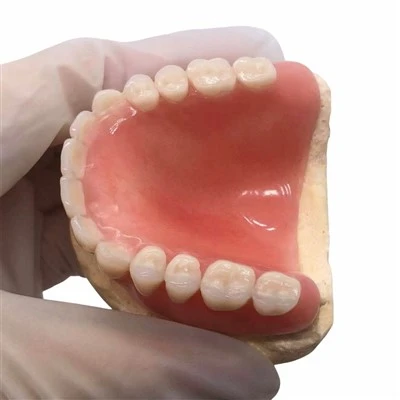
Let’s start with the basics, because all-ceramics sound simple, but their molecular structure is anything but. Unlike metal-ceramic hybrids, which rely on a metal core for strength and a ceramic layer for aesthetics, all-ceramics are fully inorganic, made from compounds like alumina, zirconia, or lithium silicate, with no metal binder. But even within that broad category, each base material has a distinct balance of properties—strength, translucency, heat resistance, wear resistance—that tailor it to specific uses. For dental applications, this is non-negotiable. A crown on your front tooth can’t look opaque like a brick, and it has to withstand 20+ years of biting and grinding without chipping. For aerospace, a ceramic heat shield for a satellite needs to survive temperatures hot enough to melt steel, while being light enough to not weigh the craft down. For industrial cookware, a ceramic insert needs to resist thermal shock (that’s the rapid temperature change when you move a hot dish from the oven to the counter) and not leach chemicals into food.
Dental all-ceramics are the segment I know best, because that’s where my business started, and it’s still 60% of our work. When I first joined the industry in 2011, most dental crowns were made from traditional feldspathic porcelain. Feldspathic is soft, super translucent, and able to mimic the natural hue of tooth enamel almost perfectly—labs love it for front teeth, where aesthetics are everything. But it’s only around 80-120 MPa in flexural strength, meaning it can chip or crack if placed under heavy bite force (like back molars, which take 150-200 psi when you chew). That’s why, by the mid-2010s, monolithic zirconia took over for posterior teeth. Zirconia is a game-changer: at 900-1,200 MPa flexural strength, it’s nearly as strong as titanium, so it can handle the hardest bites. But early zirconia was so opaque that it looked artificial for front teeth—like a bright, white block next to natural enamel. Now, we have translucent monolithic zirconia, which has a translucency gradient so lab technicians can layer it to match a patient’s unique tooth color, balancing strength and looks. Lithium silicate is the middle child here: around 350 MPa, stronger than feldspathic but not as tough as zirconia, with a natural translucency that works great for veneers and anterior crowns. Last year, we sent a batch of high-translucency lithium silicate to a lab in Chicago for a patient who needed 6 veneers on her front teeth; she wanted them to look completely natural, not like they were “done” in a lab, and the lithium silicate delivered that. We followed up six months later, and the lab said no adjustments were needed, which is unheard of for more opaque materials. The key point here: for dental, you don’t just pick “all-ceramic”—you pick feldspathic for front veneers, monolithic zirconia for back crowns, and lithium silicate for cases where both aesthetics and mild strength matter.
Now, take a sharp turn to industrial and aerospace all-ceramics, where strength and heat resistance trump aesthetics every time. These all-ceramics are a completely different class than dental ones, formulated to handle extreme conditions, not mimic teeth. Let’s talk about alumina first: 94% alumina is a workhorse for industrial parts, with 400 MPa flexural strength, able to withstand temperatures up to 1,600°C (2,912°F), and resistant to corrosion from chemicals like acids or molten metals. A client of mine, a manufacturer of commercial furnace components, came to me two years ago because their previous ceramic parts were cracking after just 3 months of use in a glass melting furnace. They’d been using a generic alumina ceramic meant for lab equipment, not the high-purity alumina we supply for industrial high-heat environments. The generic alumina had impurities that expanded when exposed to molten glass, causing micro-cracks that grew over time. Our 99.7% purity alumina has almost no impurity expansion, so the parts lasted two years, a huge win for their production line. Then there’s silicon carbide, another industrial all-ceramic, with even higher heat resistance (up to 1,700°C) and extreme hardness, used for parts like turbine blades and semiconductor wafer carriers. Last year, we supplied silicon carbide components to a aerospace contractor building a CubeSat heat shield; they needed something light, strong, and able to survive the 2,000°C heat of re-entry, and silicon carbide was the only material that checked all three boxes. The difference here is that industrial all-ceramics are formulated for functional performance, not looks—their surfaces are often matte or rough, and translucency doesn’t matter at all. That’s why mixing dental and industrial all-ceramics is a disaster; sending a dental zirconia to a furnace job would melt at the high temperatures, and sending an industrial alumina to a crown job would look like a grey, unnatural block.
Another fast-growing segment is consumer all-ceramics: kitchenware, watch components, even electric vehicle parts like brake pads. This is where you see all-ceramic more in everyday life, and the differences here are about durability and safety. For example, ceramic cookware—most people think it’s all the same, but there are two main types: ceramic-coated and solid all-ceramic. The cheap ceramic-coated pans use a thin layer of ceramic (usually made from silicon dioxide) on aluminum or steel, which can scratch off over time, especially if you use metal utensils. Solid all-ceramic cookware, on the other hand, is made entirely from dense alumina or zirconia, no coating, so it’s scratch-resistant, non-stick without chemicals, and can go from the oven to the stovetop. We supply solid all-ceramic baking dishes to a small batch kitchenware brand in Portland; they tested a competitor’s solid ceramic dish, which cracked when a home cook put it in a preheated oven at 200°C, because it used lower-density alumina that’s prone to thermal shock. Our dishes use a hot-pressed alumina that’s been sintered at 1,800°C, so it can handle temperature changes of up to 300°C in seconds without cracking. Watchmakers use all-ceramic too, mostly zirconia, because it’s scratch-proof (harder than steel) and doesn’t fade, unlike metal watches that scuff. Again, that’s a specific use case—using a dental lithium silicate for a watch face would scratch in weeks, because it’s not dense enough.
So why do these differences matter, beyond just avoiding a cracked part or a failed order? It comes down to how all-ceramics are manufactured, and their unique molecular adjustments for each application. For example, zirconia can be “partially stabilized” with yttrium oxide to boost its strength—this is the same process used in both dental zirconia and industrial zirconia, but the purity and sintering temperature are different. Dental zirconia is sintered at around 1,450°C to keep it transluscent, while industrial zirconia is sintered at 1,650°C to make it denser and stronger for high-heat use. Feldspathic porcelain is milled at low temperatures to keep its mineral composition soft enough to polish into a natural-looking surface, while alumina for furnaces is sintered at high temperatures to create a tight, non-porous structure that resists heat and corrosion. That’s why sourcing the right all-ceramic isn’t just about picking a material; it’s about working with a supplier who understands those subtle manufacturing differences.
I’ve learned over the years that the biggest mistake people make is assuming all all-ceramics are interchangeable. Last year, a startup making dental implants emailed us, asking for a “high-strength all-ceramic” for their implant posts. I assumed they meant the same monolithic zirconia we supply for crowns, so I quoted them 1,000 MPa zirconia. A week later, they called panicking, because the zirconia was too brittle for the implant’s screw mechanism, which needed a flexible material to handle jaw movement. It turned out they were working on a new implant design, and needed a different type of all-ceramic—calcium phosphate ceramic, which is more biocompatible and flexible, better for implant posts. That was a close call, and it taught me that even when a client says “all-ceramic,” we need to ask the right questions: what’s the operating temperature? How much force will it handle? Does it need to be biocompatible? Does it need to look natural? Those answers are what narrow down the right material.
For anyone reading this who’s working on a project that uses all-ceramic, my advice is to not just search for “all-ceramic suppliers.” Ask for material data sheets, ask about sintering processes, ask for examples of similar projects your supplier has completed. For labs, don’t just order “zirconia”—specify the translucency grade that fits the tooth you’re working on. For industrial teams, don’t assume a generic ceramic will work in high heat—check the purity and thermal expansion rate.
At the end of the day, all-ceramic is one of the most versatile materials we have, but its versatility is also its weakness. One size never fits all, whether you’re crafting a front veneer that needs to smile, a furnace part that needs to survive heat, or a watch face that needs to last a lifetime. If you’re working on a project and need to figure out which all-ceramic is right for you, we’re here to help—we’ve spent years refining our materials across every segment, from dental to industrial to consumer, and we don’t just supply parts; we work with clients to make sure their project works. Don’t guess at all-ceramic material specifications—reach out and let’s talk through your needs.
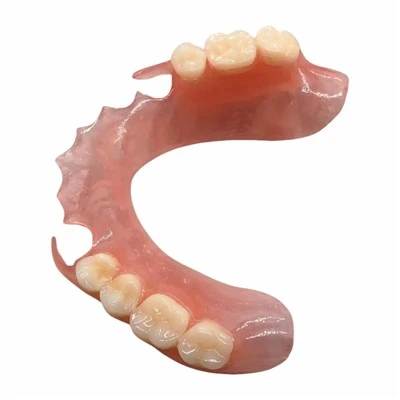
Removable Prostheses References
- Zhang, Y., & Lawn, B. R. (2018). Mechanical properties of dental ceramics: A review. Journal of Dental Research, 97(10), 1095-1103.
- Lee, S., & Kim, J. (2020). High-temperature all-ceramic materials for industrial applications. Journal of Materials Science, 55(23), 9987-10012.
- Thompson, J. M. (2019). Thermal shock resistance of dense alumina ceramics for kitchenware applications. Journal of Ceramic Science and Technology, 10(4), 521-528.
Shenzhen Tuomei Dental Technology Co., Ltd.
We are one of the most professional all ceramic manufacturers and suppliers in China, featured by quality products and low price. Please rest assured to buy discount all ceramic made in China here from our factory. Welcome to view our website for more information.
Address: Room 301, Building C Fuhe Industrial Park No.18 Hexiu West Road, Zhancheng Community Fuhai Subdistrict, Bao’an District, Shenzhen, Guangdong, China
E-mail: dentallab.works@gmail.com
WebSite: https://www.sztuomeidentallab.com/
